
\n\n
Key developments:
- A wave of state‑level action is tightening the financial and environmental rules for AI data centers. In California, Governor Gavin Newsom signed a suite of seven bills that create a dedicated rate class for data‑center power, force operators to fund grid and water upgrades, and block the practice of passing utility costs onto ratepayers.
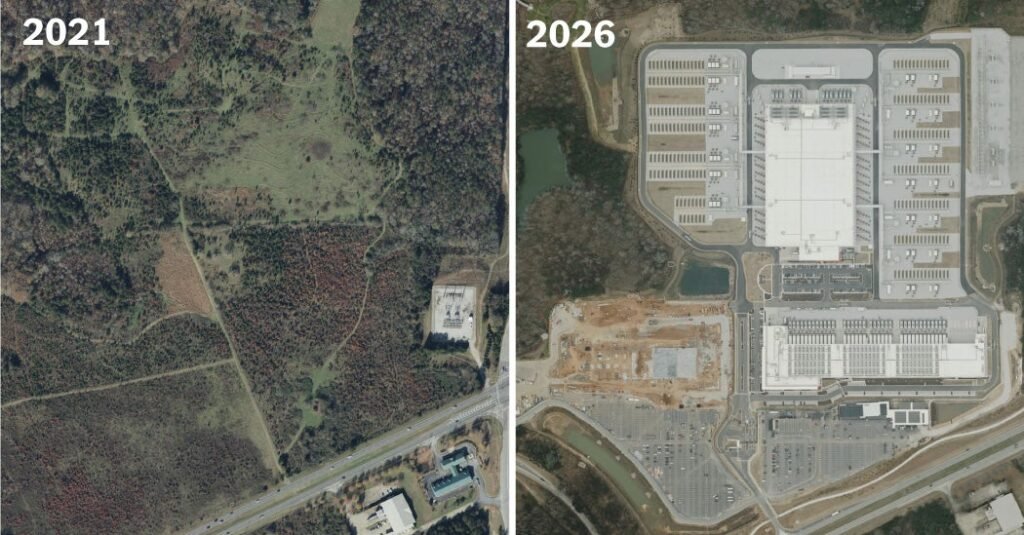
- Technically, AI facilities are hitting hard limits. Industry reports note that rapid GPU scaling is outpacing grid capacity, thermal dissipation, and interconnect bandwidth. Cooling innovations such as two‑phase immersion can shave up to 40% of energy use, but the fundamental problem remains the scarcity of grid connections, with wait times now stretching from months to several years.
- Companies are responding with massive capital infusions. Nvidia pledged up to $105 billion to back an OpenAI data‑center project and is investing $1.5 billion in the SB Energy build‑out, while the broader market sees billions earmarked for power‑purchase agreements and new renewable links.
- Internationally, the AI compute landscape is expanding fast. China’s operational AI capacity is now estimated at 24 GW, approaching the United States’ 56 GW, with an additional 50 GW under construction, underscoring the global race for compute.
Why it matters:
These regulatory and infrastructure constraints shape where and how AI workloads can be deployed. State policies that force cost recovery on the grid could slow new builds or shift them to regions with looser rules, affecting regional economic development and broadband access. The grid bottleneck and cooling challenges limit the speed at which AI models can be trained, potentially delaying breakthroughs and increasing the cost of AI services. Large corporate investments signal confidence but also raise questions about market concentration and the environmental footprint of megawatt‑scale facilities.
What to watch next:
- Follow how other states replicate or diverge from California’s regulatory framework, especially on utility cost pass‑throughs and water usage.
- Monitor grid‑upgrade projects and the adoption of solid‑state transformers or portable generation (e.g., natural‑gas turbines) as interim solutions.
- Track further corporate financing rounds, especially Nvidia’s multi‑billion commitments and any new renewable power purchase agreements tied to AI farms.
- Watch the global compute balance as China pushes toward 50 GW‑plus of new AI capacity, which could reshape supply‑chain dynamics for chips and cooling hardware. [[1, 2]]