
\n\n
Recent research is rapidly expanding the capabilities of small‑scale robots and their perception hardware, promising new applications in search‑and‑rescue, healthcare, and autonomous vehicles. MIT scientists unveiled an AI‑driven control system that makes a tiny flying robot move with insect‑like agility, increasing its speed by roughly 450 % and enabling it to perform ten somersaults in just eleven seconds—an advance that could let such micro‑drones navigate tight, cluttered spaces for inspection or disaster response.
At the same time, a team demonstrated light‑powered microscopic robots that can zip through liquids, capture bacteria, and deposit them elsewhere, opening a pathway for precise manipulation of cells and microbes in biomedical settings. These “cleaner” bots showcase how external energy sources like light can power ultra‑small machines without bulky onboard batteries.
On the perception front, MIT engineers have also re‑engineered chip‑based lidar, using a novel arrangement of differently shaped antennas to achieve a wider, clearer field of view without moving parts. This solid‑state lidar design could make self‑driving cars more reliable and cheaper by reducing mechanical complexity.
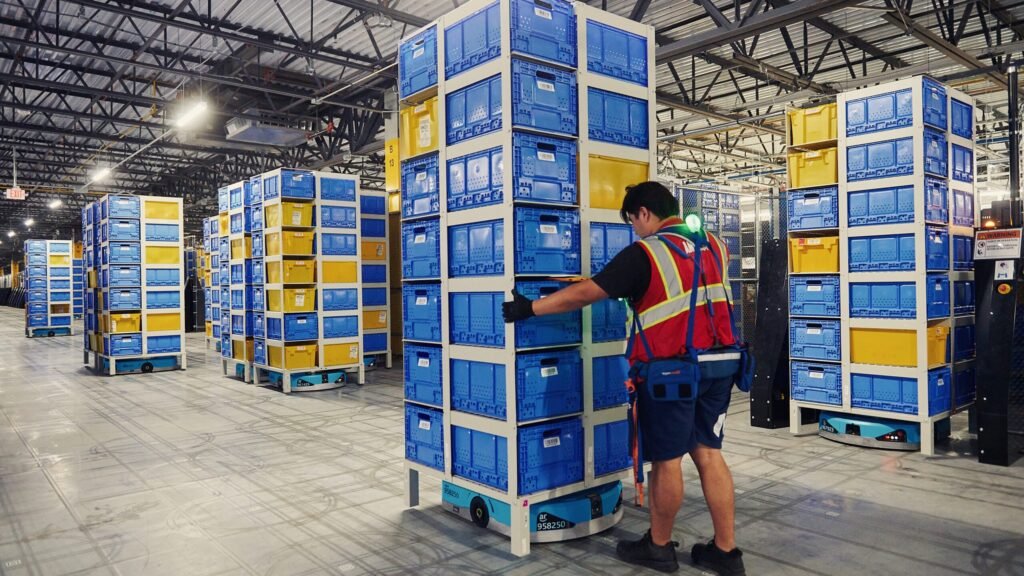
Together, these developments illustrate a broader trend: as robots become smaller and their sensing richer, they can tackle tasks previously limited to larger platforms. However, researchers caution that scaling up robot fleets can introduce coordination challenges; Harvard work noted that simply adding more robots may cause traffic jams, highlighting the need for smarter task‑allocation algorithms.
What to watch next:
- Integration of AI‑enhanced micro‑drones into real‑world rescue missions.
- Clinical trials of light‑driven bots for targeted drug delivery or pathogen removal.
- Deployment of solid‑state lidar in commercial autonomous vehicle fleets.
- Advances in swarm coordination algorithms to prevent performance bottlenecks as robot numbers grow. [[1, 2]]