
\n\n
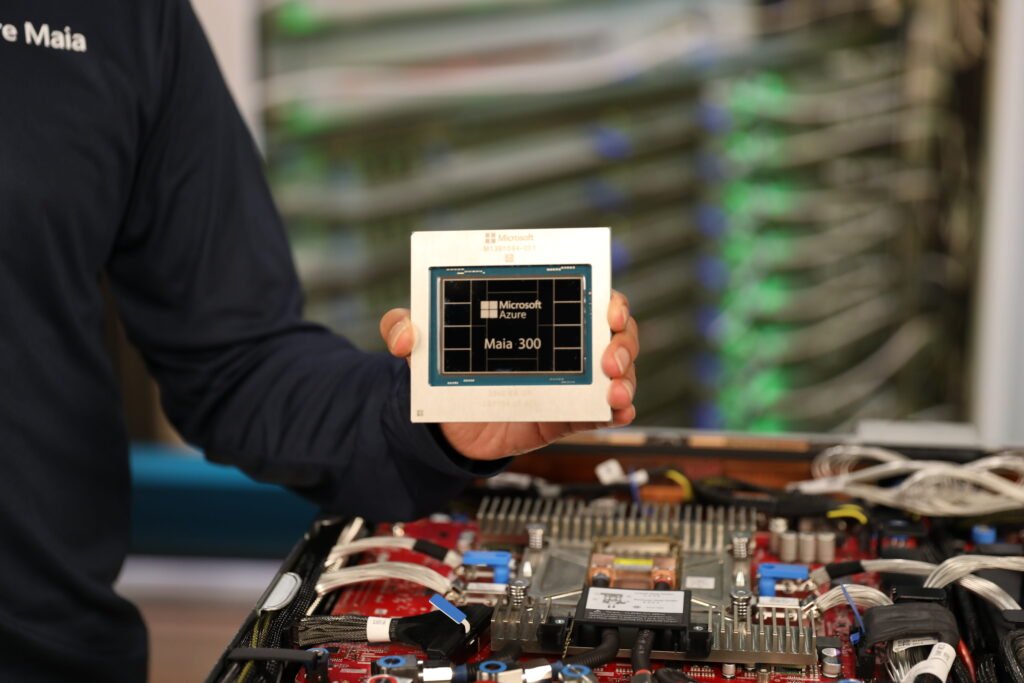
The AI‑chip landscape is shifting from reliance on off‑the‑shelf GPUs to purpose‑built silicon designed for specific data‑center workloads. Microsoft’s third‑generation Maia 300 chip promises “40% more tokens per megawatt than leading GPU‑based systems” and is slated for production in 2027, with the company planning a “multi‑gigawatt deployment” of the family that will become the primary inference engine for its services. At the same time, AMD unveiled the Helion open‑blueprint rack, capable of housing up to 32,768 CPU cores and targeted for release in November 2026, underscoring a move toward heterogeneous, CPU‑centric AI infrastructure.
Why it matters
- Energy efficiency – Maia 300’s claimed token‑per‑megawatt boost directly addresses the soaring power demands of AI inference, a concern highlighted by McKinsey’s forecast that inference will make up roughly 60% of AI compute by 2030.
- Scale and flexibility – Helion’s massive core count and the availability of open‑spec racks enable operators to build bespoke AI clusters without being tied to a single vendor’s GPU roadmap.
- Ecosystem momentum – NVIDIA’s contributions to the OCP Open MGX architecture and Marvell’s upcoming 9 TB‑per‑controller CXL expanders show a broader industry push toward modular, high‑bandwidth designs that can support both the new chips and the massive data flows they generate.
- Geopolitical pressure – With silicon photonics and optical networking becoming a “next U.S.–China semiconductor battleground,” the ability to design and produce domestically‑optimized AI silicon offers strategic resilience for companies operating in contested markets.
What to watch next
1. Production rollout of Maia 300 – Early performance data from Microsoft’s 2027 deployments will reveal whether the claimed efficiency gains hold at scale.
2. Helion rack adoption – Monitoring cloud providers and enterprise customers for Helion‑based installations will indicate how quickly the industry embraces CPU‑heavy AI clusters.
3. CXL and photonic interconnects – As Marvell’s 3406 expanders and emerging silicon‑photonic links mature, they could become the critical bandwidth backbone for both Maia 300 and Helion systems.
4. Regulatory and supply‑chain dynamics – Continued U.S. export curbs and China’s push for domestic optical‑transceiver capacity may reshape sourcing strategies for AI chip manufacturers.
Together, these developments suggest a near‑term acceleration in custom AI silicon design, with energy‑efficient inference chips and massively parallel rack architectures poised to dominate the next generation of data‑center AI workloads. [[1, 2]]