
\n\n
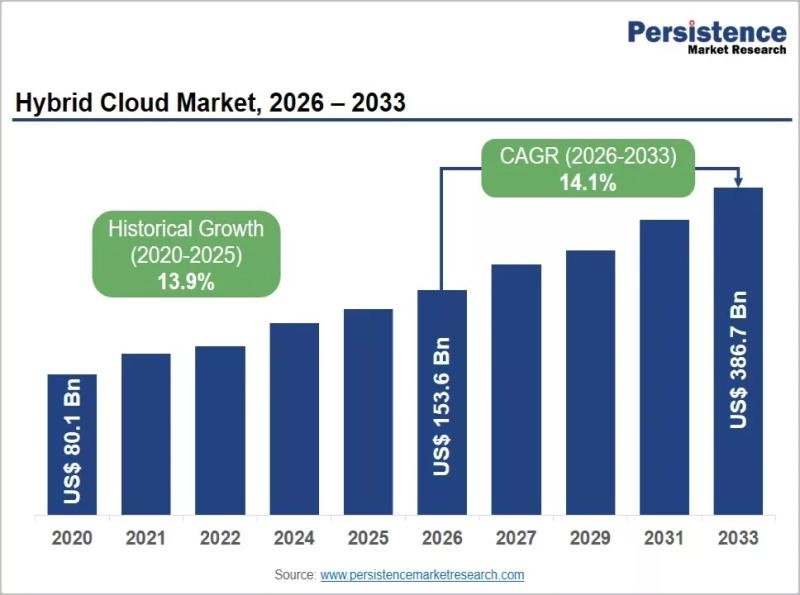
Key developments: A new Persistence Market Research forecast shows the hybrid‑cloud market will grow from $153.6 billion in 2026 to $386.7 billion by 2033, a 14.1% compound annual growth rate. The surge is being powered by broader enterprise cloud adoption, the rise of AI‑intensive workloads, and the need for flexible data management. Providers are doubling down on cloud orchestration, workload portability, automation, and unified security platforms, with AI‑driven management and Kubernetes‑based orchestration highlighted as critical enablers.
Why it matters: Hybrid architectures let organizations blend private, public, and on‑premises resources, balancing performance, security, and cost. This flexibility is essential for modernizing legacy apps, supporting distributed workforces, and meeting stringent data‑governance rules. As AI, machine learning, and analytics demand ever‑greater compute capacity, hybrid clouds provide the scalable resources of public clouds while keeping sensitive workloads under direct control. Additionally, heightened focus on business continuity and disaster‑recovery is driving firms to adopt hybrid solutions that can shift workloads quickly during disruptions.
What to watch next: Look for continued vendor investments in AI‑assisted resource allocation and automated security policies, as well as expanded Kubernetes‑based tools that improve workload portability. Monitoring how enterprises tackle the "complex integration" challenge will be key—successful platforms will need to unify disparate operating systems, networking configurations, and management tools. Regional shifts, especially in Europe where data‑sovereignty concerns are prominent, may also shape adoption patterns as regulators push for hybrid‑cloud‑first strategies. [[1]]