
\n\n
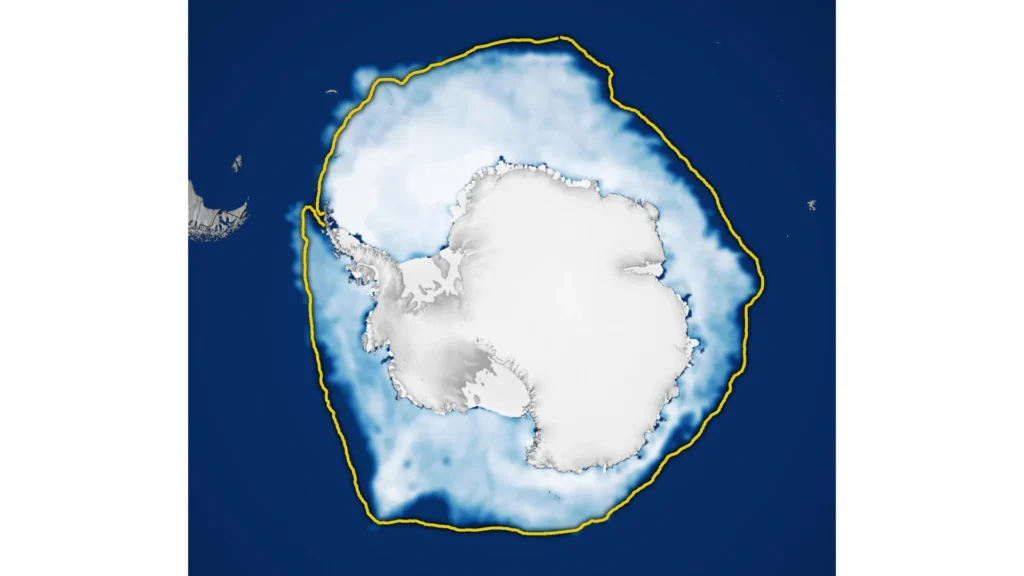
The latest satellite data show that Antarctica’s sea‑ice extent peaked on September 14 2026 at only about 17.59 million km², the third‑lowest winter maximum since observations began. This continues a sharp downward trend that reversed a decades‑long period of modest growth after 2015, following record highs in the early 2010s. The decline matters because Antarctic sea ice influences global ocean circulation, marine ecosystems, and the stability of ice shelves; a persistent reduction could signal broader climate shifts. Researchers will monitor whether the recent lows represent a new baseline or natural variability, watching upcoming winter extents, the 2023 extreme low‑minimum benchmark, and the interplay with warming ocean waters to gauge future impacts. [[1]]