
\n\n
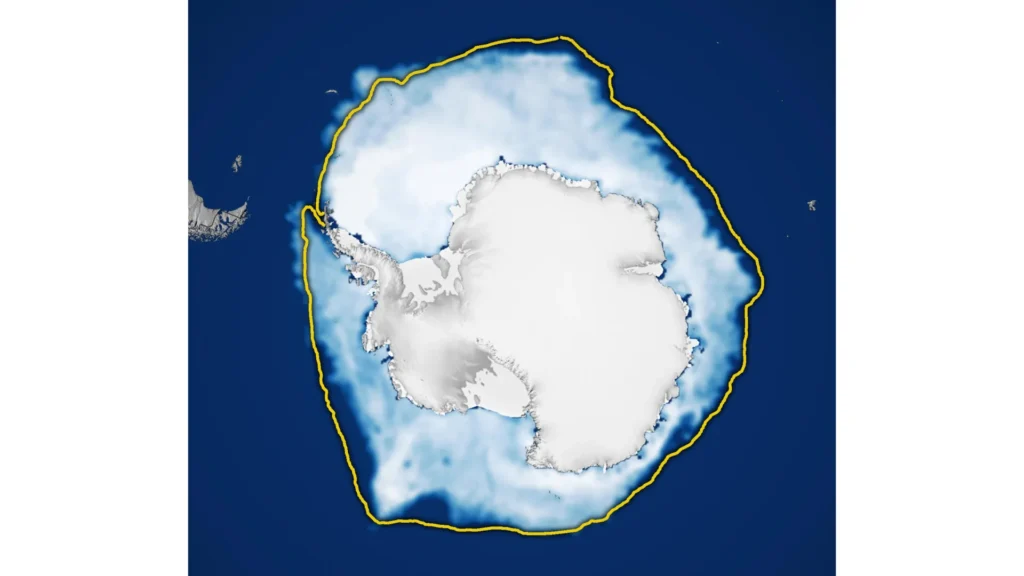
Antarctic sea ice reached its third‑lowest winter maximum in 2026, extending a remarkable decline that began after years of record‑breaking growth. Satellite data show the ice peak on September 14 covered about 17.59 million km², making it the third‑lowest extent since records began. After a multidecadal increase of roughly 1 % per decade between 1979 and 2014, the upward trend reversed in 2015, with substantial losses from 2016 onward and the most extreme lows recorded in 2023. Scientists are monitoring whether this reversal signals a lasting shift in Antarctica’s frozen landscape, aided by newer observations from Japan’s GCOM‑W satellite added to the record in 2025.
Key developments:
- The 2026 peak is the third‑lowest on record, highlighting a rapid swing from earlier growth.
- Long‑term satellite records now include data from the GCOM‑W satellite, improving the continuity of observations.
Why it matters:
- Antarctic sea ice influences global ocean circulation and climate feedbacks; a sustained decline could alter heat transport and sea‑level rise dynamics.
- The shift contrasts with the Arctic’s steady ice loss, underscoring differing regional responses to warming.
What to watch next:
- Ongoing satellite monitoring for 2027 will reveal if the declining trend continues or stabilises.
- Research into atmospheric and oceanic drivers, such as warm circumpolar deep water, will help determine if this is a temporary fluctuation or a longer‑term transformation. [[1]]