
\n\n
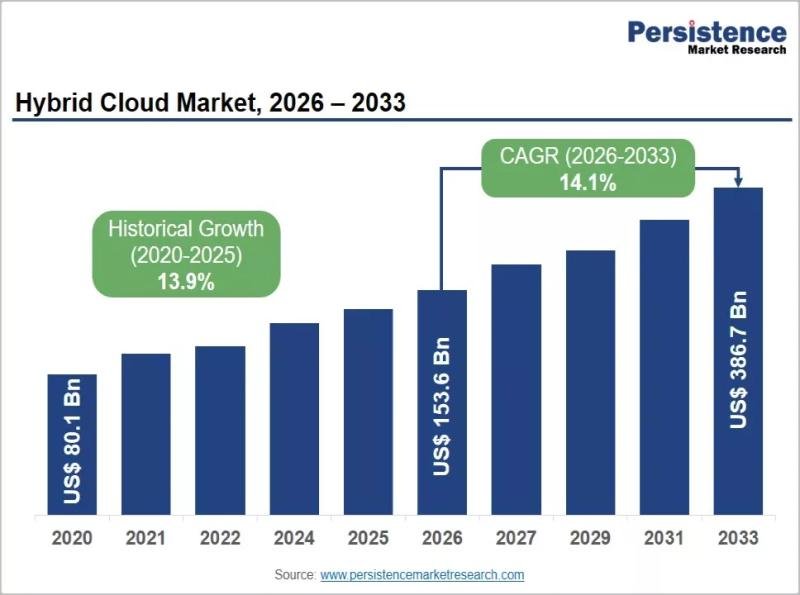
Key developments: The market is forecast to grow from $153.6 billion in 2026 to $386.7 billion by 2033, a 14.1% CAGR, fueled by rising enterprise cloud adoption, AI …
\n\n
Key developments: The market is forecast to grow from $153.6 billion in 2026 to $386.7 billion by 2033, a 14.1% CAGR, fueled by rising enterprise cloud adoption, AI …

\n\n
Key developments: 2026 data from the Cloud Security Alliance, Verizon, Google Cloud, and IBM show that inadequate identity and access management (IAM) has become the top concern for cloud environments, overtaking traditional …

\n\n
Key developments:

\n\n
Alphabet disclosed that its cloud backlog has surpassed $514 billion, prompting a massive $811 billion spend on AI‑focused compute capacity. The scale of commitments underscores the rapid growth of enterprise …

\n\n
Alphabet’s cloud platform has secured an unprecedented $514 billion of customer commitments, pushing its cloud backlog above the $500 billion mark. The surge reflects a rapid acceleration in cloud revenue—up …
![[News] CPU Price Hike Wave: Intel Reportedly Up to 20%, Qualcomm ...](https://ebotweb.com/wp-content/uploads/2026/10/high-performance-computing-news-qb70Jp.png)
\n\n
The AI‑accelerated high‑performance computing (HPC) sector is booming, with the market projected to rise from $33.42 billion in 2025 to $43.62 billion in 2026 – a 30.5 …
![[News] CPU Price Hike Wave: Intel Reportedly Up to 20%, Qualcomm ...](https://ebotweb.com/wp-content/uploads/2026/10/high-performance-computing-news-jJwm5Z.png)
\n\n
The AI‑accelerated high‑performance computing (HPC) sector is entering a period of rapid expansion, driven by soaring demand for large‑scale AI model training and real‑time inference. Recent market …
\n\n
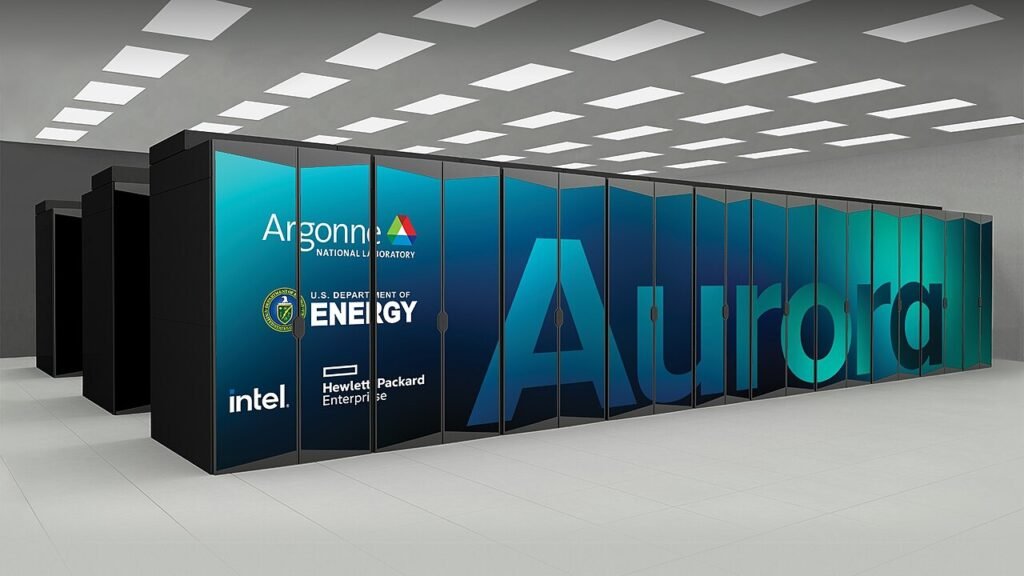
The Argonne National Laboratory recently held the Argonne Extreme-Scale Computing Workshop, offering participants hands‑on training with cutting‑edge supercomputers and artificial‑intelligence tools. The event, part of the ATPESC 2026 series, focused on building the expertise needed …
A new quantum‑sensing platform built at the University of Waterloo demonstrates that a single molecule can serve as a detector of atomic‑scale magnetic signals. By extending the sensor’s spin coherence to about 400 µs—roughly sixty times longer than conventional methods—the …

\n\n
A team at the University of Waterloo’s Institute for Quantum Computing has demonstrated a new quantum‑sensing method that uses a single molecule to detect atomic‑scale magnetic signals. By keeping …